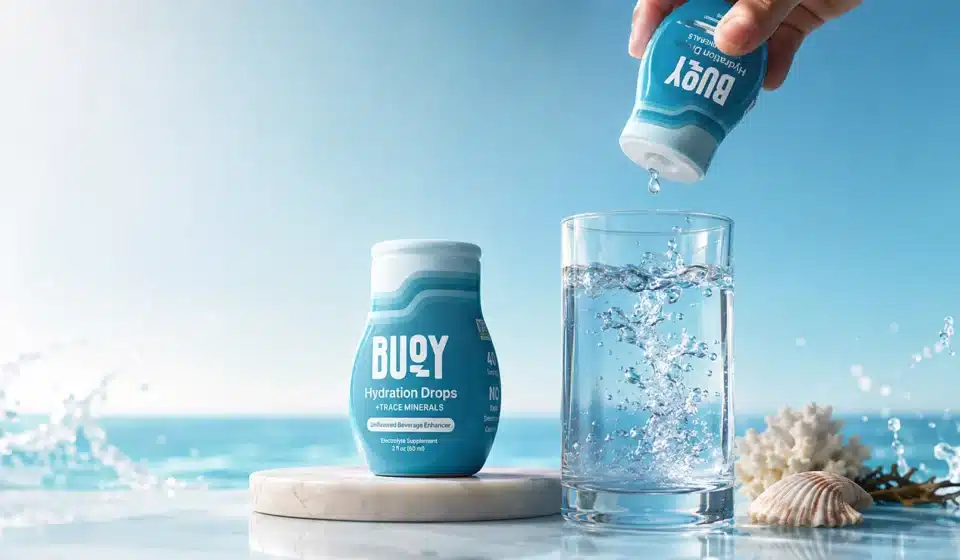
If you like electrolytes but hate sweet powders, artificial flavors, stevia, and carrying stick packs everywhere, Buoy Hydration takes a very different approach.
Table Of Content
- Buoy Hydration Quick Verdict
- Best for
- Less ideal for
- What does that mean practically?
- Step 1
- Step 2
- Step 3
- Choose Buoy if
- Choose LMNT if
- Buoy wins for
- Cure wins for
- Buoy Hydration
- Instant Hydration
- Pros
- Cons
- Buy Buoy Hydration if
- Skip it if
- Is Buoy Hydration good?
- How much sodium is in Buoy Hydration Drops?
- How many times a day should you use Buoy?
- Does Buoy have sugar?
- Does Buoy contain stevia?
- Does Buoy Hydration have calories?
- Does Buoy break a fast?
- Does Buoy Hydration contain caffeine?
- Can you put Buoy in coffee?
- Is Buoy better than Liquid I.V.?
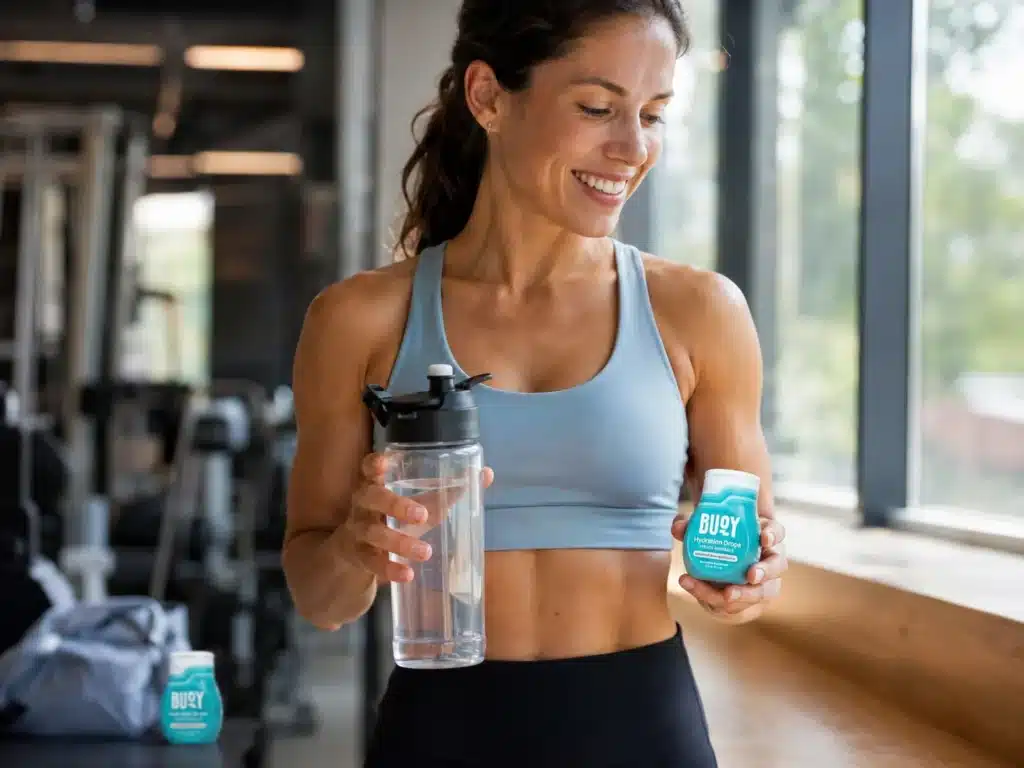
- Is Buoy good for workouts?
- Are Buoy Hydration Drops clinically tested?
- Where can I buy Buoy Hydration?
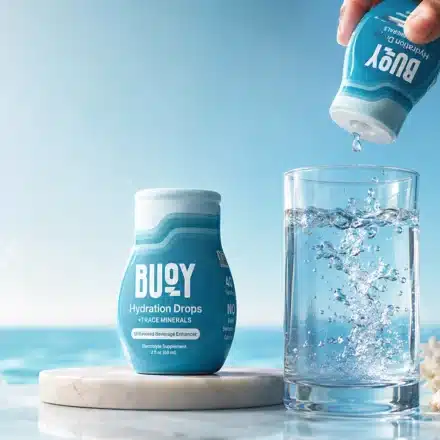
Instead of making another flavored electrolyte drink mix, Buoy sells concentrated liquid electrolyte drops that you squeeze directly into water, coffee, tea, smoothies, or other beverages.
The flagship Buoy Hydration Drops contain no sugar, sweeteners, or added flavors and provide ocean-derived electrolytes plus 87+ trace minerals. One serving is only 1.5 mL, and Buoy recommends adding a squeeze to multiple drinks throughout the day.
That convenience sounds impressive.
But there is one important detail that deserves much more attention:
One serving contains only around 50 mg of sodium.
That makes Buoy very different from higher-sodium electrolyte products such as Liquid I.V., LMNT, or Instant Hydration.
So is Buoy Hydration actually effective, or are the drops simply too weak?
Here is the complete breakdown.
Buoy Hydration Quick Verdict
Overall Rating: 8.5/10
Buoy Hydration is one of the most interesting electrolyte products for everyday hydration because it solves a problem most powders ignore: flexibility.
There is:
- No sugar
- No sweetener
- No strong flavor
- No powder packet
- No shaker required
- No need to dedicate an entire bottle of water to electrolytes
You simply squeeze the drops into whatever you are already drinking.
The current Hydration Drops provide approximately 50 mg sodium per serving, and Buoy recommends using them about four to seven times throughout the day.
That means Buoy makes more sense as a gradual daily hydration system than as a single high-dose sports drink.
Best for:
- Everyday hydration
- People who dislike flavored electrolyte drinks
- Coffee and tea drinkers
- Fasting or low-carb lifestyles
- Travel
- Light exercise
- People who prefer small electrolyte doses throughout the day
Less ideal for:
- Heavy sweaters
- Long endurance workouts
- Intense outdoor exercise
- People specifically looking for a large sodium dose in one serving
If maximum electrolyte replacement after intense sweating is your priority, something like Instant Hydration, Liquid I.V., or LMNT may make more sense.
What Is Buoy Hydration?
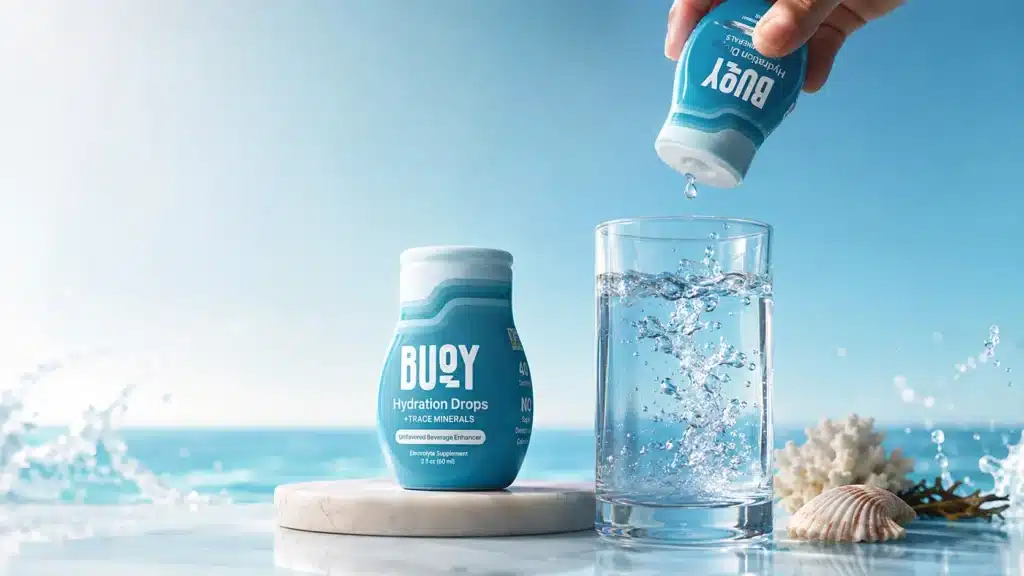
Buoy Hydration is a liquid electrolyte supplement from Buoy, sold through the company’s Just Add Buoy website.
Its flagship product is Buoy Hydration Drops.
Unlike traditional electrolyte powders, there is nothing to mix or dissolve.
One serving is approximately 1.5 mL, or a short squeeze from the bottle. Buoy recommends adding the drops to four to seven beverages per day.
You can use them in:
- Water
- Coffee
- Tea
- Smoothies
- Juice
- Matcha
- Lemonade
Buoy even markets the drops for use in alcoholic beverages, although adding electrolytes does not eliminate alcohol’s health effects or make excessive drinking safe.
The main selling point is that the Hydration Drops are intentionally unflavored and contain no sugar, sweeteners, or added flavoring.
Buoy Hydration Drops Nutrition
Here is where Buoy becomes unusual.
A standard serving contains approximately:
| Electrolyte | Approx. Amount |
|---|---|
| Sodium | 50 mg |
| Chloride | 80 mg |
| Potassium | 10 mg |
| Magnesium | 0.5 mg |
| Calcium | 0.5 mg |
The formula also contains 87+ ionic trace minerals plus B vitamins and antioxidant-containing ingredients.
Buoy currently describes its B-vitamin ingredients as including forms of vitamins B1, B5, and B6.
The Hydration Drops also contain:
0 calories
0 carbohydrates
0 sugar
according to Buoy’s current product information.
Is 50 mg of Sodium Enough?
This is probably the most important part of our Buoy Hydration review.
A single squeeze contains approximately 50 mg sodium.
That is low compared with many electrolyte products.
For example:
| Electrolyte Product | Approx. Sodium Per Standard Serving |
|---|---|
| Buoy Hydration Drops | 50 mg |
| Cure Hydration | ~240 mg |
| Instant Hydration | ~500 mg |
| Liquid I.V. | ~510 mg |
| LMNT | ~1,000 mg |
Our existing reviews show that Cure Hydration uses a moderate electrolyte formula, while Instant Hydration vs Liquid I.V. compares products delivering roughly 500 mg sodium per serving.
But comparing one squeeze of Buoy with one packet of those products is not completely fair.
Buoy specifically recommends four to seven servings throughout the day.
At that usage level:
4 squeezes = roughly 200 mg sodium
7 squeezes = roughly 350 mg sodium
So Buoy is designed around repeated low-dose electrolyte intake rather than one concentrated drink.
What does that mean practically?
For normal daily hydration, that approach can be convenient.
For someone finishing a long run, spending hours outside in summer heat, using a sauna, or losing large amounts of salty sweat, 50 mg from one squeeze is relatively modest.
Electrolyte needs vary considerably with activity, climate, diet, sweat rate, and health status, so higher sodium is not automatically better for everyone. Recent expert guidance similarly emphasizes matching electrolyte intake to actual fluid and sweat losses rather than taking very high doses automatically.
Does Buoy Hydration Actually Work?
This is where Buoy has something many hydration startups do not have:
published human research.
A University of Pittsburgh-affiliated research group studied a commercial electrolyte beverage corresponding to Buoy in healthy, active men and women.
The study was eventually published in the peer-reviewed journal Nutrients in February 2025.
The study included 30 healthy, active adults and compared hydration markers after:
- The electrolyte beverage
- Plain water
- Another electrolyte beverage
Researchers measured variables including urine output, net fluid balance, beverage hydration index, and other hydration-related markers.
The published research concluded that the tested electrolyte beverage improved several measures of hydration compared with water alone.
Buoy markets the study as showing its drops were:
64% more hydrating than water
and
49% more hydrating than a leading electrolyte product.
Those numbers sound extremely strong, but some context matters.
A Closer Look at Buoy’s “64% More Hydrating” Claim
The study provides legitimate evidence that the Buoy beverage improved hydration measures compared with plain water.
However, the competitor comparison deserves more caution.
Buoy and water were consumed gradually over approximately four hours, while the comparison electrolyte beverage was consumed much faster — approximately one liter in 30 minutes.
The researchers themselves noted that the difference between the commercial beverages could be related to:
- Different beverage compositions
- Different ingestion rates
- Or both
rather than necessarily proving that Buoy’s formula alone is dramatically superior.
So we would interpret the research this way:
Strong evidence: Buoy can improve fluid retention compared with plain water under the conditions studied.
Less certain: Buoy is universally “49% better” than competing electrolyte formulas.
That distinction makes this a much fairer interpretation of the study.
Buoy Hydration Ingredients
Buoy focuses heavily on mineral sourcing.
The company says Hydration Drops use ocean-derived electrolytes and contain a spectrum of 87+ ionic trace minerals, including minerals such as boron, silica, and manganese.
The electrolyte profile includes the major minerals people typically associate with hydration:
- Sodium
- Chloride
- Potassium
- Magnesium
- Calcium
Buoy also incorporates B vitamins and antioxidant-containing botanical ingredients.
The formula notably avoids:
- Sugar
- Stevia
- Artificial sweeteners
- Added flavors
- Artificial colors
according to the company’s current product information.
For shoppers who dislike the sweetness of most hydration products, this is arguably Buoy’s biggest competitive advantage.
What Do Buoy Hydration Drops Taste Like?
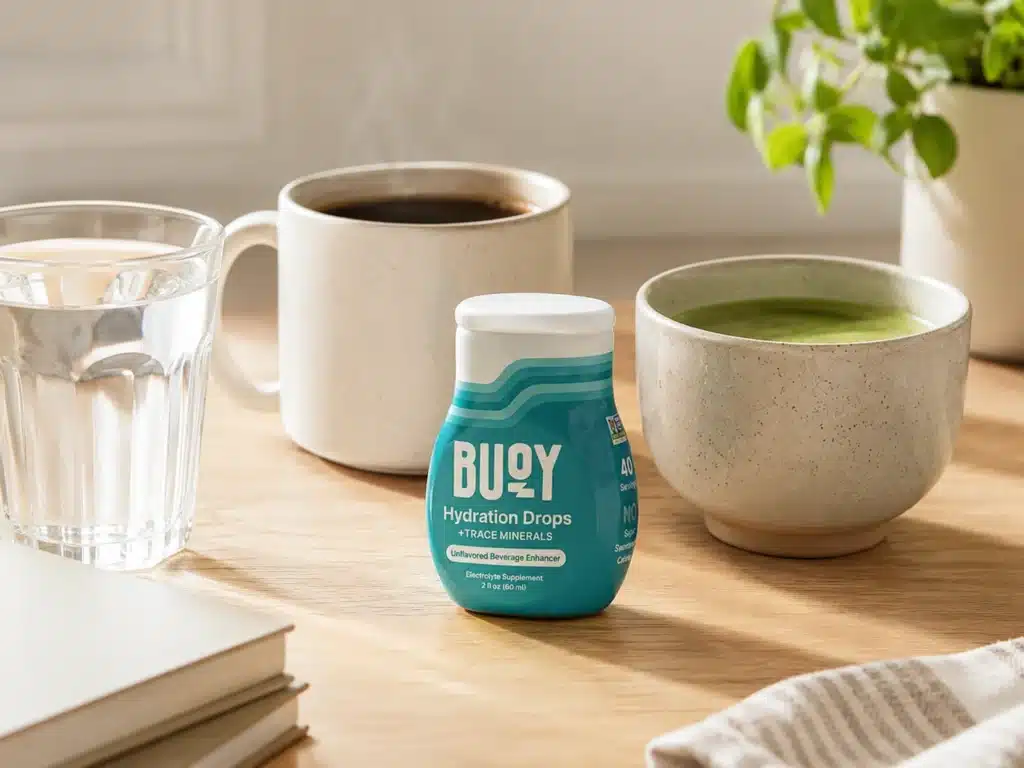
Buoy calls Hydration Drops unflavored, but unflavored does not necessarily mean completely tasteless.
Electrolytes are minerals and naturally have some mineral or salty taste.
Buoy acknowledges that some users may notice a subtle mineral flavor, especially if they squeeze too much into one beverage.
The recommended serving is only 1.5 mL.
In stronger drinks such as:
- Coffee
- Tea
- Smoothies
- Juice
the mineral taste may be difficult to notice.
Plain water is where sensitive users will probably detect it most easily.
Third-party testing by Health also selected Buoy as an especially useful unflavored electrolyte option, reporting that the testers found it easy to mix into beverages without adding meaningful flavor.
How Do You Use Buoy Hydration Drops?
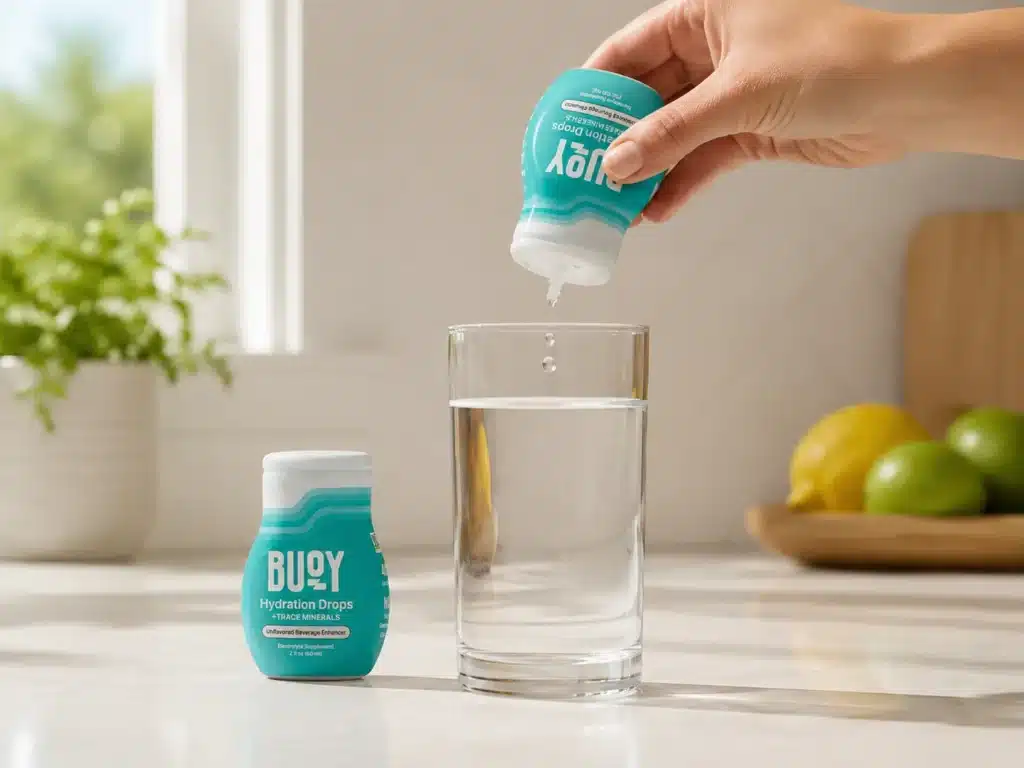
Using Buoy is extremely simple.
Step 1
Choose your beverage.
Step 2
Give the Buoy bottle one quick squeeze.
Step 3
Drink normally.
One serving is approximately 1.5 mL.
The company currently recommends putting Hydration Drops into four to seven drinks per day, beginning with a morning beverage.
Buoy says the liquid formula dissolves immediately rather than requiring stirring or shaking like a powder.
That is especially convenient for coffee and tea, where dumping a flavored hydration powder would usually make little sense.
Does Buoy Hydration Break a Fast?
For people practicing intermittent fasting, Buoy Hydration Drops are particularly interesting.
The standard Hydration Drops are listed as having:
- 0 calories
- 0 carbohydrates
- 0 sugar
Buoy therefore markets them as fasting-compatible.
For a conventional calorie-restriction fast, a zero-calorie electrolyte product is unlikely to meaningfully contribute calories.
People fasting for specific medical, religious, or laboratory-test reasons should follow the requirements of that particular fast instead.
Does Buoy Hydration Have Caffeine?
Standard Buoy Hydration Drops do not contain caffeine.
Buoy states that its Energy Drops are the product in its current drops range that contains caffeine, sourced from green tea.
So you can add regular Hydration Drops to coffee without adding another stimulant dose.
How Much Does Buoy Hydration Cost?
At the time of this review, Buoy lists a one-month Hydration Drops supply as:
3 bottles
120 servings
Current listed pricing is approximately:
$39 one-time purchase
or
$30.03 with subscription
with subscription pricing representing about 23% off the listed one-time price.
That works out to roughly:
| Usage | Subscription Cost | One-Time Cost |
|---|---|---|
| Per squeeze | ~$0.25 | ~$0.33 |
| 4 servings/day | ~$1.00/day | ~$1.30/day |
| 7 servings/day | ~$1.75/day | ~$2.28/day |
That is an important pricing detail.
Buoy advertises a 120-serving package as approximately a month supply, which makes sense at roughly four servings per day.
If you consistently use seven servings every day, those 120 servings would naturally disappear much faster.
Buoy Chronic Illness Discount
One unusual feature of Buoy is its Chronic Illness Support Program.
The company currently states that qualifying users dealing with certain chronic conditions can receive 35% off Buoy products, along with free shipping. Conditions listed by Buoy include POTS, dysautonomia, ME/CFS, Long COVID, IBS, autoimmune conditions, and others.
This is a commercial discount program, not medical treatment.
Anyone with a condition that affects fluid, electrolyte, kidney, blood-pressure, or medication management should discuss electrolyte supplements with their healthcare professional.
Buoy Hydration Reviews: What Are Customers Saying?
On Buoy’s own website, the Hydration Drops currently carry approximately a 4.8/5 rating from more than 5,400 reviews, with the company showing 96% of reviewers recommending the product.
Positive reviews frequently focus on the convenience of adding the drops to normal beverages.
For example, one verified buyer highlighted being able to add them to beverages without introducing another flavor.
Not every customer likes the product, however.
Buoy’s review pages also contain negative reviews from users who dislike the mineral taste.
That fits our expectation:
The less flavor Buoy adds to hide the minerals, the more likely especially sensitive users are to detect some mineral character.
Buoy Hydration vs Liquid I.V.
These products take almost opposite approaches.
| Feature | Buoy Hydration | Liquid I.V. |
|---|---|---|
| Format | Liquid drops | Powder stick |
| Flavor | Essentially unflavored | Flavored |
| Sodium | ~50 mg/squeeze | ~510 mg/packet |
| Sugar | 0 g | Depends on formula |
| Sweeteners | None in Hydration Drops | Formula dependent |
| Best use | Gradual daily hydration | More concentrated hydration |
| Coffee/tea friendly | Excellent | Poor |
| Travel convenience | Excellent | Excellent |
Liquid I.V. provides dramatically more sodium in one serving.
Buoy gives you more control.
Read our complete Instant Hydration vs Liquid I.V. comparison for a deeper look at concentrated electrolyte formulas.
Buoy Hydration vs LMNT
LMNT is designed around very high sodium.
A typical LMNT packet contains approximately 1,000 mg sodium, while Buoy Hydration Drops provide around 50 mg per squeeze.
That is a twentyfold difference per standard serving.
These products therefore serve different users.
Choose Buoy if:
You want small amounts of electrolytes throughout a normal day.
Choose LMNT if:
You intentionally want a very high-sodium electrolyte drink for situations such as heavy sweating, endurance exercise, or a dietary strategy where increased sodium is appropriate.
For most people, neither strategy is automatically superior. Your activity level, sweat losses, diet, climate, and health status matter.
Buoy Hydration vs Cure Hydration
Cure sits between Buoy and high-sodium hydration powders.
Our Cure Hydration review found that Cure delivers approximately 240 mg sodium and 300 mg potassium per packet, uses coconut water and Himalayan salt, and has no added sugar.
Buoy wins for:
- No sweetness
- Beverage versatility
- Coffee and tea use
- Tiny serving size
- Portability
Cure wins for:
- Larger electrolyte dose
- Fruity drinking experience
- One-and-done serving convenience
Buoy Hydration vs Instant Hydration
The difference is even clearer here.
Instant Hydration packets provide approximately 500 mg sodium per standard packet, compared with Buoy’s approximately 50 mg per Hydration Drops serving.
Buoy Hydration
Better for repeated low-dose daily hydration.
Instant Hydration
Better when you specifically want a meaningful amount of sodium in a single drink.
You can see how stronger electrolyte products compare in our best electrolyte drinks for quick hydration ranking.
Pros and Cons of Buoy Hydration
Pros
No sugar
The flagship Hydration Drops have zero sugar.
No sweeteners
No stevia or artificial sweeteners are used in Hydration Drops.
No added flavor
This makes Buoy unusually versatile.
Extremely portable
The small squeeze bottles are much easier to carry than tubs or ready-to-drink bottles.
Works in almost any beverage
Coffee is probably the best example of where Buoy makes sense and flavored powders do not.
Published clinical research
There is peer-reviewed human research supporting improved hydration versus plain water under the tested conditions.
Low cost per individual serving
Subscription pricing is approximately $0.25 per squeeze.
Cons
Very low sodium per individual serving
50 mg is dramatically less than many performance-focused electrolytes.
You need multiple servings
The recommended four to seven daily squeezes may feel less convenient than one packet for some users.
Not completely tasteless for everyone
Some people notice a mineral taste.
The “49% better than another electrolyte” headline needs context
Different consumption speeds were used during the study, making it difficult to attribute the entire difference solely to formula composition.
Not designed as a huge post-workout sodium hit
Heavy sweaters may prefer a more concentrated electrolyte formula.
Who Should Buy Buoy Hydration?
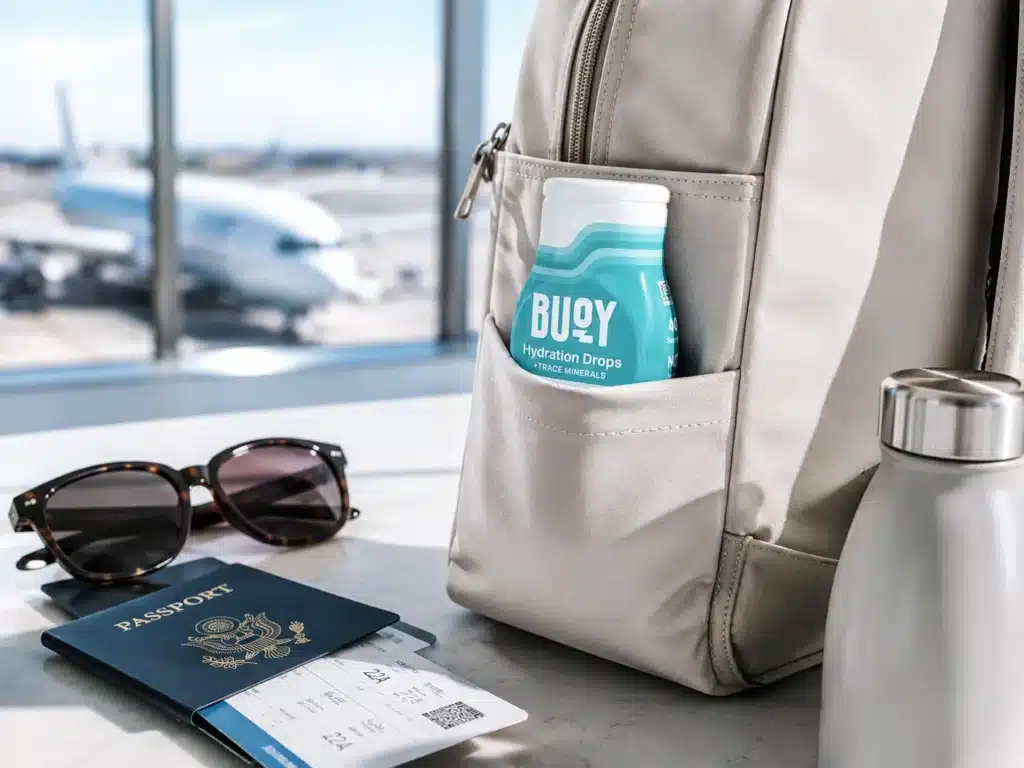
Buoy makes the most sense if you:
- Hate sweet electrolyte drinks
- Want electrolytes in coffee or tea
- Want something portable
- Practice intermittent fasting
- Prefer low-dose electrolytes throughout the day
- Want zero sugar
- Want more control over how much electrolyte you add
- Primarily need everyday rather than extreme athletic hydration
Who Should Skip Buoy?
Consider another product if you:
- Want 500–1,000 mg sodium in one drink
- Regularly participate in prolonged endurance exercise
- Lose large amounts of salty sweat
- Want a strong fruit flavor
- Prefer one packet rather than squeezing drops into several beverages
For concentrated formulas, compare our Nectar Hydration review, Cure Hydration review, and best electrolyte drinks of 2026.
Is Buoy Hydration Worth It?
Yes — for the right type of hydration routine.
Buoy should not be judged as though it were another Liquid I.V. or LMNT packet.
It is trying to do something different.
Instead of putting a large electrolyte dose into one flavored drink, Buoy gives you a small liquid dose that can disappear into several beverages throughout your day.
That makes the product especially good for:
Convenience
Everyday hydration
Fasting
Travel
Coffee drinkers
People who hate sweet electrolytes
Its biggest weakness is electrolyte concentration.
A single 50 mg sodium squeeze is unlikely to satisfy someone deliberately looking for aggressive sodium replacement after prolonged heavy sweating.
But that is not necessarily what Buoy Hydration is designed to do.
Final Buoy Hydration Review Verdict
Overall Rating: 8.5/10
Buoy Hydration earns a strong score because it offers something genuinely different in an increasingly crowded electrolyte market.
Instead of competing on louder flavors or larger powder packets, Buoy focuses on:
- Liquid convenience
- No sugar
- No sweeteners
- No added flavor
- Ocean-derived minerals
- 87+ trace minerals
- Small adjustable servings
- Published hydration research
The strongest feature is flexibility.
Being able to add electrolytes to coffee in the morning, water during the afternoon, and another beverage later without turning everything into a watermelon-berry sports drink is genuinely useful.
The weakness is the 50 mg sodium serving size.
People wanting serious electrolyte replacement after heavy sweating should compare Buoy with stronger options before buying.
Buy Buoy Hydration if:
You want clean, unflavored electrolyte drops for everyday use.
Skip it if:
You primarily need a high-sodium sports hydration product.
For those users, start with our comparison of Instant Hydration vs LMNT vs Liquid I.V..
Frequently Asked Questions
Is Buoy Hydration good?
Yes. Buoy Hydration is a good option for everyday electrolyte supplementation, particularly for people who dislike flavored or sweet electrolyte drinks. Its biggest limitation is the relatively low electrolyte dose per individual squeeze.
How much sodium is in Buoy Hydration Drops?
Buoy Hydration Drops currently provide approximately 50 mg of sodium per serving.
How many times a day should you use Buoy?
Buoy currently recommends adding Hydration Drops to approximately four to seven beverages per day.
Does Buoy have sugar?
Standard Buoy Hydration Drops contain 0 grams of sugar.
Does Buoy contain stevia?
The flagship Hydration Drops are purposefully made without stevia or other sweeteners.
Does Buoy Hydration have calories?
Buoy lists Hydration Drops as containing 0 calories.
Does Buoy break a fast?
The standard Hydration Drops contain zero calories, carbohydrates, and sugar, making them compatible with many conventional intermittent-fasting approaches. Specific medical or religious fasting rules may differ.
Does Buoy Hydration contain caffeine?
No. Standard Hydration Drops do not contain caffeine. Buoy says its Energy Drops are the product in its drops line that contains caffeine.
Can you put Buoy in coffee?
Yes. Buoy specifically designs its liquid drops to be added to beverages including coffee, tea, smoothies, and water.
Is Buoy better than Liquid I.V.?
It depends on your goal. Buoy is better for unflavored, low-dose everyday hydration. Liquid I.V. provides a much larger sodium dose per serving and may be better suited to situations where stronger electrolyte replacement is desired.
Is Buoy good for workouts?
Buoy can add electrolytes during light or moderate activity, but one Hydration Drops serving contains only around 50 mg sodium. People losing large amounts of sweat during prolonged exercise may need a more concentrated electrolyte strategy.
Are Buoy Hydration Drops clinically tested?
Yes. Research involving the commercial electrolyte beverage was conducted by University of Pittsburgh-affiliated researchers and published in Nutrients in 2025. The study reported improved hydration measures compared with water alone.
Where can I buy Buoy Hydration?
Buoy Hydration Drops are available directly through the official Just Add Buoy website, where the company currently offers one-time purchases and subscription options.