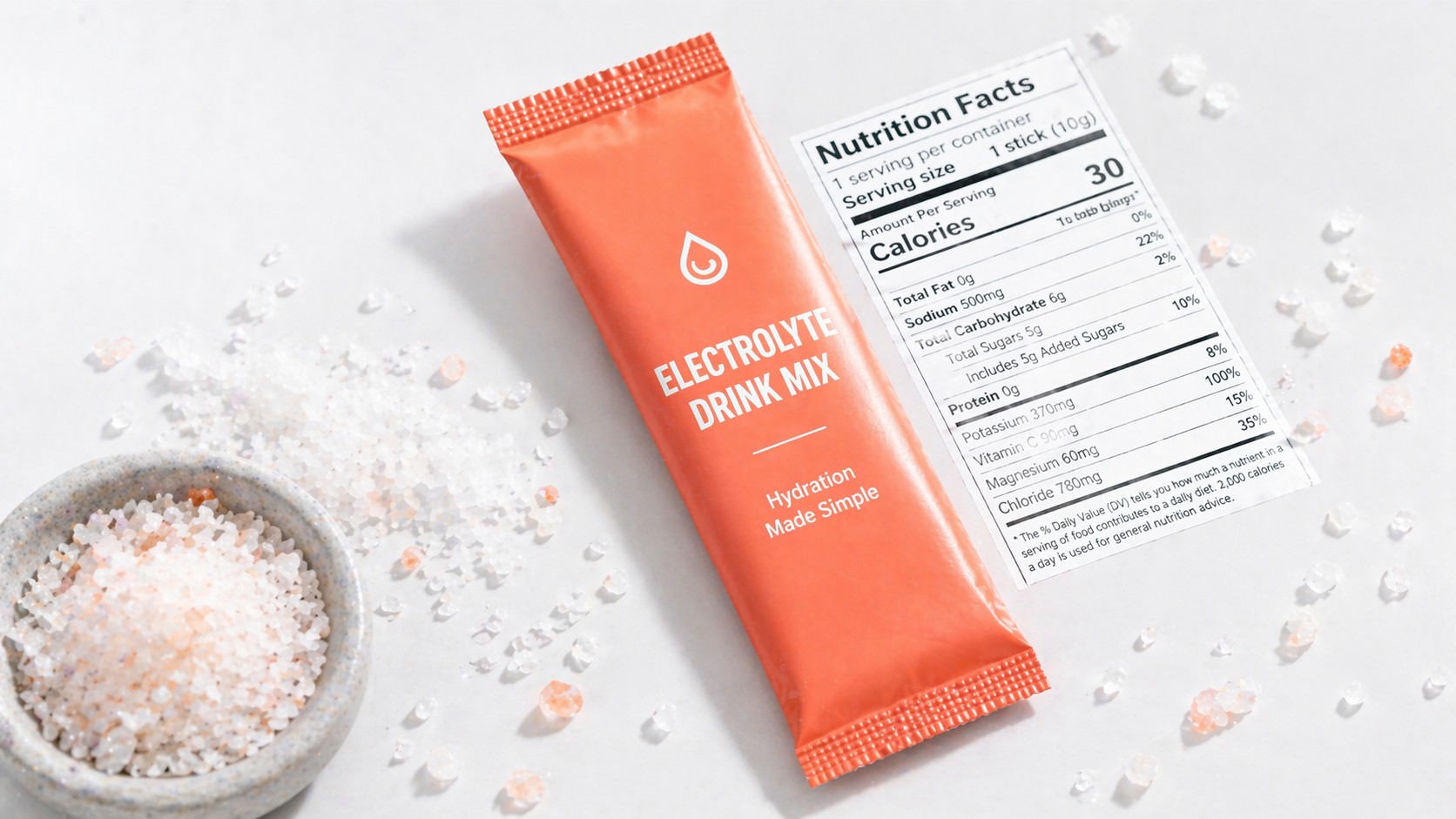

Not medical advice. This article is for educational and informational purposes only and is not a substitute for advice from a licensed healthcare provider. Consult a doctor or registered dietitian before making changes to your hydration, sodium intake, or supplement use — especially if you have a health condition, are pregnant or breastfeeding, or are giving electrolyte products to a child.
Table Of Content
- What Liquid IV’s Label Says About Kids
- Age-by-Age Guide
- Under 12 months (infants)
- 1–3 years old
- 4–8 years old
- 9–13 years old
- 13+ (teens)
- Sodium Limits for Children (AAP Guidelines)
- When Kids Actually Need Electrolytes
- Pedialyte vs Liquid IV for Kids
- DIY Kid-Safe Electrolyte Drink (Homemade ORS)
- Signs of Dehydration in Kids
- Frequently Asked Questions
- Can kids under 4 drink Liquid IV?
- What’s the minimum age for Liquid IV?
- How much Liquid IV can a child have?
- Is Pedialyte better for kids?
- Are electrolyte drinks bad for kids?
- What are signs of dehydration in children?
- When should I give my kid electrolytes?
- Related
- External references
Quick answer: Liquid IV is not formulated for children under 4 years old. For kids 4 and up, a half-packet diluted in 16+ oz of water is generally safe during illness or intense heat, but Liquid IV contains 11g of sugar and 510mg of sodium per serving — levels that are higher than pediatric guidelines recommend for daily use. For children, Pedialyte or Pedialyte-equivalent ORS is the medically appropriate electrolyte drink. Liquid IV makes a dedicated Kids formulation with lower sodium (240mg) and appropriate dosing — prefer that over adult Liquid IV if your child needs electrolytes.
Medical disclaimer: This article provides general information, not medical advice. Always consult your child’s pediatrician before giving any supplement, especially during illness.
What Liquid IV’s Label Says About Kids
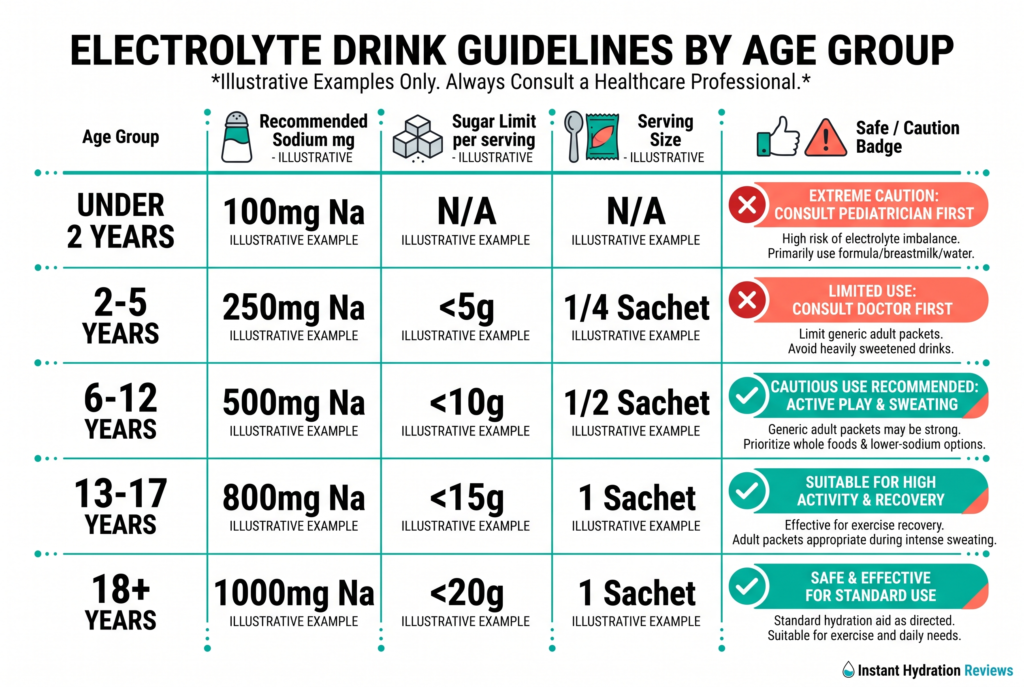
Liquid IV’s Hydration Multiplier (adult formula) packaging recommends use for ages 4+. The brand also sells a dedicated Kids Hydration Multiplier designed for children ages 1+ with a reduced-sodium formula and smaller serving size.
Adult formula: 510mg sodium, 11g sugar per serving — designed for adult bodies Kids formula: 240mg sodium, 9g sugar per serving — designed for kids
The American Academy of Pediatrics (AAP) generally recommends avoiding high-sodium, high-sugar sports drinks for children outside of specific athletic or illness contexts. Liquid IV’s own Kids formulation aligns with this guidance; the adult formula does not.
Age-by-Age Guide
Under 12 months (infants)
Do not give Liquid IV or any adult electrolyte drink. Infant kidneys don’t handle sodium loads well. For dehydration in infants, use Pedialyte infant formulations under pediatrician guidance or seek medical care.
1–3 years old
Do not give adult Liquid IV. The sodium, sugar, and potassium content are calibrated for adult bodies. For toddler dehydration (stomach bugs, fever), Pedialyte is specifically formulated and safe.
Liquid IV’s Kids formula is labeled for ages 1+. Even so, use sparingly and only during illness, hot weather, or pediatric athletic scenarios.
4–8 years old
Adult Liquid IV is labeled safe for this age range but not optimal for daily use. For occasional use during illness or heavy heat exposure, half a packet diluted in 16+ oz of water is reasonable. Not appropriate as a daily beverage.
Liquid IV Kids formulation is the better choice for this age range — proper dose, less sugar, less sodium.
9–13 years old
Adult Liquid IV becomes more reasonable as kids grow. A full packet in 16+ oz water is appropriate during youth sports in heat, after vomiting or diarrhea, or long travel days. Not appropriate as daily hydration.
13+ (teens)
Teen athletes can use adult Liquid IV like an adult. 1 packet per day during active training is reasonable. Monitor total daily sodium if eating a typical American diet.
Sodium Limits for Children (AAP Guidelines)
Daily sodium limits by age:
| Age | Daily sodium limit | Liquid IV packet | % of daily limit |
|---|---|---|---|
| 1-3 years | 1,200mg | 510mg | 43% |
| 4-8 years | 1,500mg | 510mg | 34% |
| 9-13 years | 1,800mg | 510mg | 28% |
| 14-18 years | 2,300mg | 510mg | 22% |
A single adult Liquid IV packet uses 22–43% of a child’s daily sodium limit. Combined with a typical kid’s diet (which often includes significant salt from snacks, cheese, pasta, and processed foods), you can easily push total intake over recommended limits.
When Kids Actually Need Electrolytes
Most healthy kids eating a normal diet do not need daily electrolyte drinks. Situations where electrolyte supplementation makes sense:
- Acute illness with fluid loss — vomiting, diarrhea, fever
- Sports in heat — youth soccer, football, tennis in summer
- Post-exercise for endurance kids — swim meets, long tournaments
- Travel and air travel — especially long flights
- Refusing water when sick — flavored electrolyte drinks may be accepted when plain water isn’t
For these scenarios, Pedialyte is the default medical answer. Liquid IV Kids is a reasonable alternative for older kids during exercise. Adult Liquid IV is a last resort — use a half packet diluted.
Pedialyte vs Liquid IV for Kids
Pedialyte is the clinically-validated standard for pediatric rehydration:
- Formulated specifically for children’s bodies
- Pediatric sodium dose (245mg per 8 oz)
- Used by pediatricians and pediatric ERs
- Decades of safety record
- Often recommended by the AAP
Adult Liquid IV is not designed for kids. Liquid IV Kids is closer to Pedialyte-appropriate but still has higher sugar than some AAP guidance prefers.
Default to Pedialyte unless your pediatrician has specifically recommended otherwise. See our Instant Hydration vs Pedialyte comparison.
DIY Kid-Safe Electrolyte Drink (Homemade ORS)
If you need electrolytes in a pinch and don’t have Pedialyte or Liquid IV Kids available, this is the WHO-endorsed homemade Oral Rehydration Solution recipe:
- 1 liter of clean water
- 6 teaspoons of sugar
- 1/2 teaspoon of salt
Mix thoroughly. Offer small sips (1–2 teaspoons at a time for young kids). This is the exact ratio used in WHO pediatric dehydration protocols and is safer for kids than improvising with adult Liquid IV.
Signs of Dehydration in Kids
Recognize dehydration early. Mild to moderate signs:
- Dry or sticky mouth
- Fewer wet diapers or urination than normal
- No tears when crying (in infants/toddlers)
- Sunken soft spot in infants
- Lethargy or irritability
- Dark-colored urine
Severe dehydration (requires medical attention):
- Extremely dry mouth and tongue
- No wet diapers for 8+ hours (infants) or 12+ hours (older kids)
- Sunken eyes
- Cold, mottled hands and feet
- Extreme lethargy or unresponsiveness
- Rapid heartbeat, rapid breathing
Severe dehydration is a medical emergency. Go to urgent care or call your pediatrician immediately.
Frequently Asked Questions
Can kids under 4 drink Liquid IV?
No. Do not give adult Liquid IV to children under 4. Use Pedialyte or Liquid IV’s dedicated Kids formulation (ages 1+).
What’s the minimum age for Liquid IV?
Adult formula: labeled for 4+. Kids formulation: labeled for 1+. Under 1: do not use any sports drink; consult your pediatrician.
How much Liquid IV can a child have?
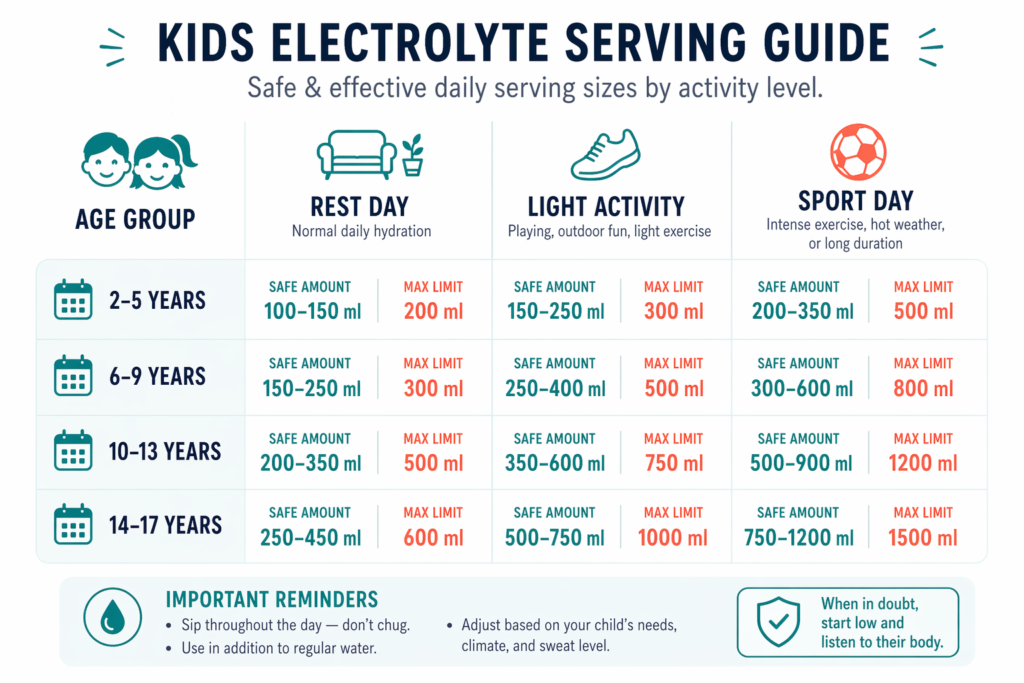
Kids 4–8: half a packet diluted in 16+ oz water occasionally — not daily. Kids 9–13: up to one full packet per day during athletic or illness needs. Not a daily wellness beverage at any age.
Is Pedialyte better for kids?
Yes. Pedialyte is pediatrically formulated and clinically validated. It’s the default answer for child rehydration. Liquid IV is secondary.
Are electrolyte drinks bad for kids?
Not inherently — the electrolyte content is fine. The issue is that most adult electrolyte drinks contain too much sodium, sugar, or artificial ingredients for daily pediatric use. For acute situations, kid-formulated electrolyte drinks (Pedialyte, Liquid IV Kids) are appropriate.
What are signs of dehydration in children?
Dry mouth, reduced urination, no tears when crying, lethargy or irritability, dark urine, sunken soft spot in infants. Severe dehydration (sunken eyes, cold extremities, unresponsiveness) is a medical emergency.
When should I give my kid electrolytes?
During illness with vomiting or diarrhea; during or after intense athletic activity in heat; during long travel; when they’re refusing water when sick. Not needed daily for healthy kids eating a normal diet.
Related
- Instant Hydration vs Pedialyte
- How much sodium is in Liquid IV?
- How many Instant Hydration packets per day?
- Best electrolyte drinks 2026
External references
- American Academy of Pediatrics — sports drinks for children
- WHO Oral Rehydration Solution formula
- CDC pediatric hydration guidelines
Last updated: April 2026. Reviewed by our editorial team. This article is not a substitute for pediatric medical advice. Consult your child’s doctor before giving any supplement.